admin
admin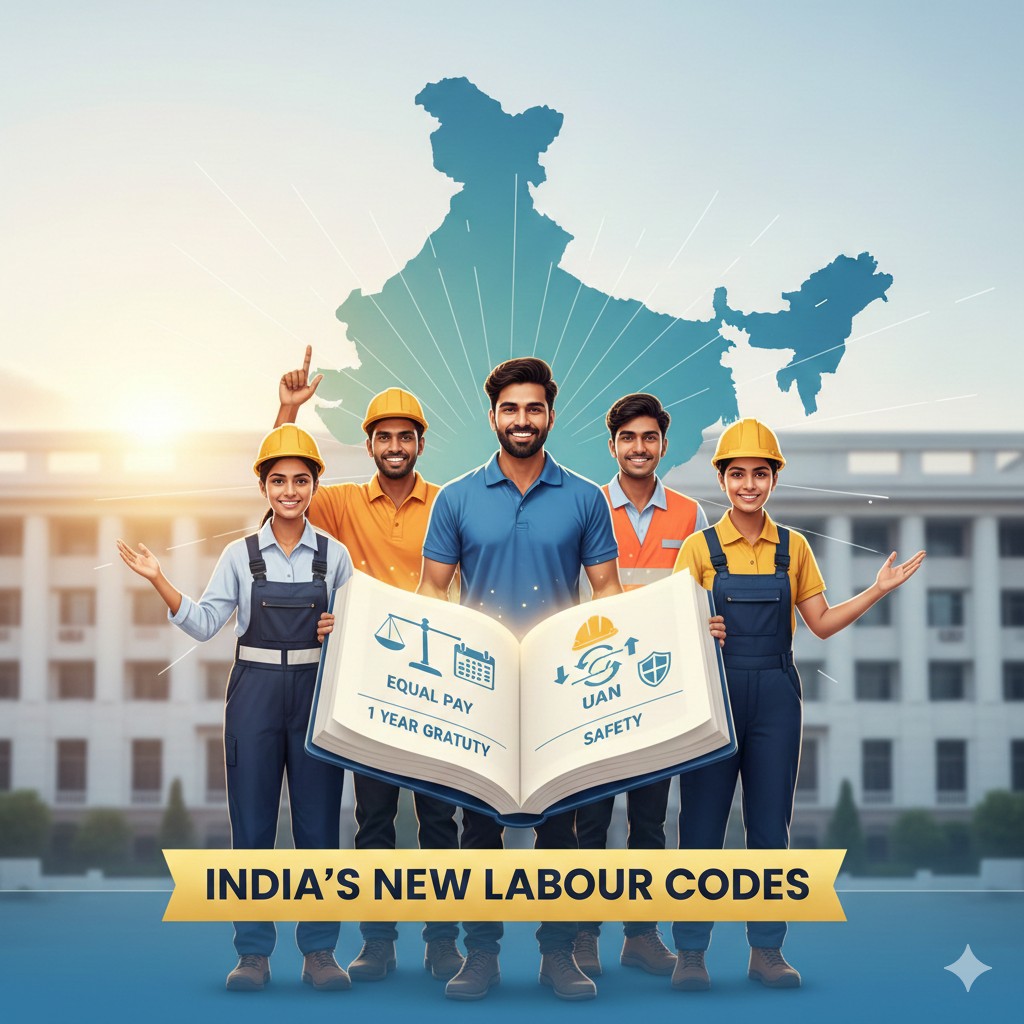
India’s central government has enacted a significant structural shift in its employment regulations by consolidating 29 existing labor laws into four comprehensive Labour Codes. These reforms aim to simplify compliance for businesses while extending crucial benefits and protections to a wider range of the workforce, including women, fixed-term, contract, gig, and platform workers.
Key Changes for Different Worker Segments
1. Fixed-Term and Contract Workers
- Equal Benefits: Fixed-Term Employees (FTEs) are now entitled to the same wages, leave, medical, and social security benefits as permanent employees doing comparable work.
- Gratuity Eligibility: The requirement for gratuity payment to FTEs has been drastically reduced from five years of service to just one year.
- Contract Worker Welfare: Principal employers must provide contract workers with health and social security benefits, along with mandatory annual health check-ups.
2. Gig and Platform Workers
- Formal Recognition: For the first time, the Codes formally define gig workers, platform workers, and the aggregators they work for.
- Social Security Fund: Aggregators are required to contribute a percentage of their annual turnover—specifically, between 1% and 2% of their turnover, capped at 5% of the total payments made to gig and platform workers—to a social security fund for these workers.
- Portability of Benefits: The introduction of Aadhaar-linked Universal Account Numbers (UANs) makes social security and other benefits easily transferable for workers moving across different states.
3. Enhancements for Women Employees
- Equal Pay Mandate: The new laws explicitly prohibit gender discrimination in pay, ensuring the principle of equal pay for equal work is legally enforced.
- Expanded Work Opportunities: Women are now allowed to work in all job categories, including night shifts, underground mining, and heavy machinery operations, provided they give consent and the employer adheres to mandatory safety and security norms.
- Family Definition: For the purpose of female employee benefits, the definition of ‘family’ has been broadened to include parents-in-law.
- Grievance Redressal: The new rules mandate the representation of women on workplace grievance committees.
Overarching Systemic Reforms
The consolidation of laws also introduces several broad changes aimed at standardizing and simplifying the national labor framework:
- National Floor Wage: The Codes introduce a mandatory national floor wage that states cannot pay below, ensuring a minimum standard of living across the country.
- Compliance Simplification: Businesses benefit from a more streamlined process, including a single registration and licensing system and the adoption of an “inspector-cum-facilitator” role for enforcement officials.
- Dispute Resolution: Labor dispute resolution is expedited through the formation of two-member tribunals.
- Worker Protections: All workers, including those in MSMEs, must receive mandatory appointment letters and minimum wages. Provisions include compulsory payment of wages during leave and ensuring timely payments and double wages for overtime.
- Safety Standards: A National Occupational Safety and Health (OSH) Board will set national safety standards, and establishments with over 500 workers are required to form safety committees.