admin
admin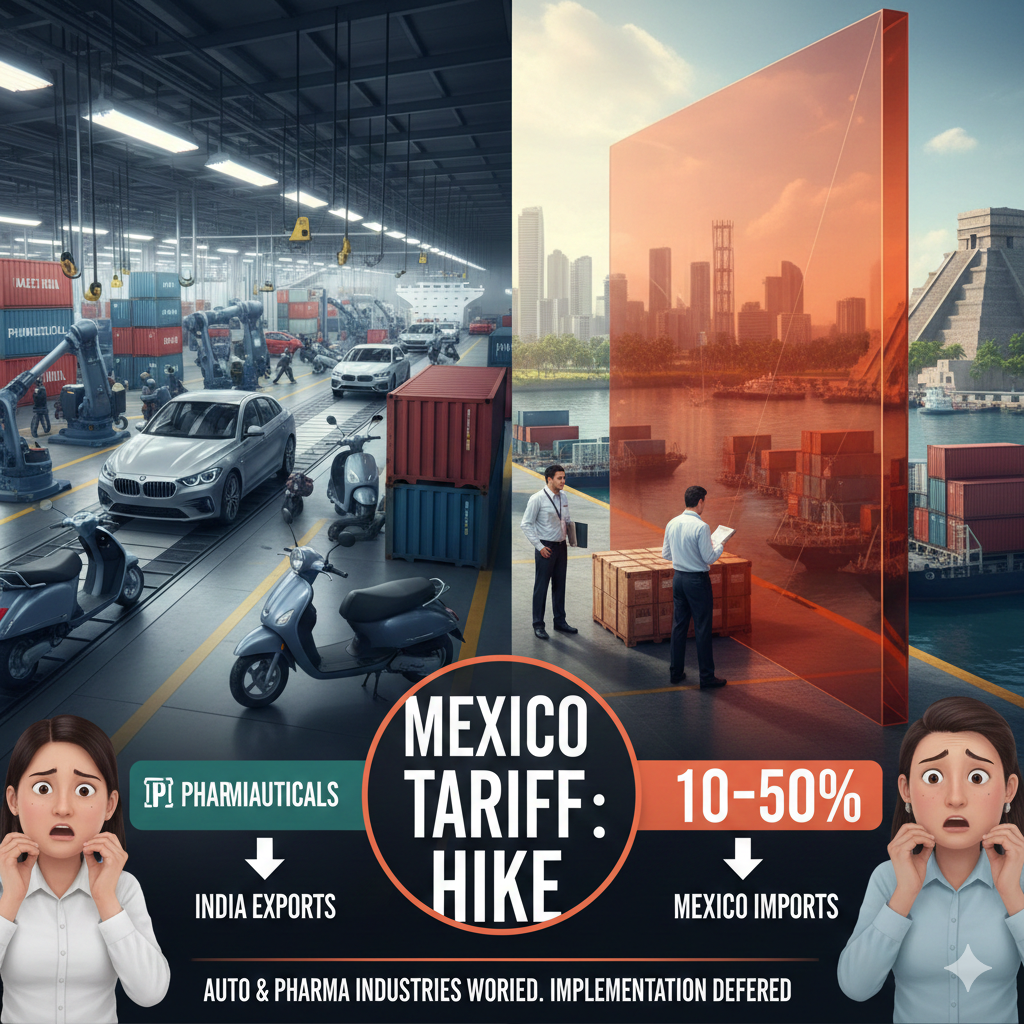
The Mexican government has proposed a significant hike in import tariffs on a wide range of goods, a move that has caused considerable apprehension within key export sectors in India, particularly the automotive and pharmaceutical industries.
Overview of Mexico’s Tariff Plan
Mexican President Claudia Sheinbaum’s administration has proposed imposing substantially higher duties, with rates potentially ranging from 10% to 50%, across more than 1,400 product categories.
This initiative is primarily directed at imports originating from countries with which Mexico does not have an active Free Trade Agreement (FTA), placing nations like India, China, and South Korea in the crosshairs.
The measure’s stated goals are to correct existing trade imbalances and safeguard domestic manufacturing employment, particularly against what is viewed as under-priced competition from certain Asian imports.
Impact on India’s Automotive Sector
The tariff plan poses a major threat to India’s automotive sector, for which Mexico is a critical export hub.
- Market Importance: Mexico currently stands as the third-largest export destination for Indian automobiles, including passenger vehicles, two-wheelers, and auto components. It is also the single largest market for Indian two-wheelers.
- Proposed Rate Increases: The planned hike includes significant duty escalations. For example:
- Tariffs on completely built unit (CBU) passenger vehicles could jump from 20% to as high as 50%.
- Duties on two-wheelers may increase from 15% to 35%.
- Tariffs on auto components are slated to rise to between 10% and 50% across various sub-categories.
Industry executives warn that these steeper duties would severely undermine the cost-competitiveness of Indian-made vehicles and parts, adversely affecting export volumes to a vital market.
Concerns for the Pharmaceutical Industry
The Indian pharmaceutical sector, which has been actively working to expand its presence in Mexico, is also deeply concerned about the proposal.
- Current Status: Indian-manufactured drugs currently enjoy a zero-tariff status for entry into Mexico.
- Future Disruption: Any sudden imposition of tariffs would discourage Indian drug makers from pursuing their expansion plans. Indian companies are key players in providing generic and more affordable alternatives to the highly-priced drugs sold by multinational corporations in the Mexican market.
Industry representatives note that this proposed tariff runs counter to recent engagement between Mexican regulatory bodies and the Indian government, which had been exploring ways to expedite drug approvals and market entry for Indian firms.
Current Status and Negotiation
Amid the widespread opposition and concerns raised by the Indian industry and government, the implementation of the proposed tariff hike has reportedly been deferred to December. Indian industry associations and government bodies are actively engaging with their Mexican counterparts to seek exemptions or alternative arrangements to mitigate the negative impact on bilateral trade.