admin
admin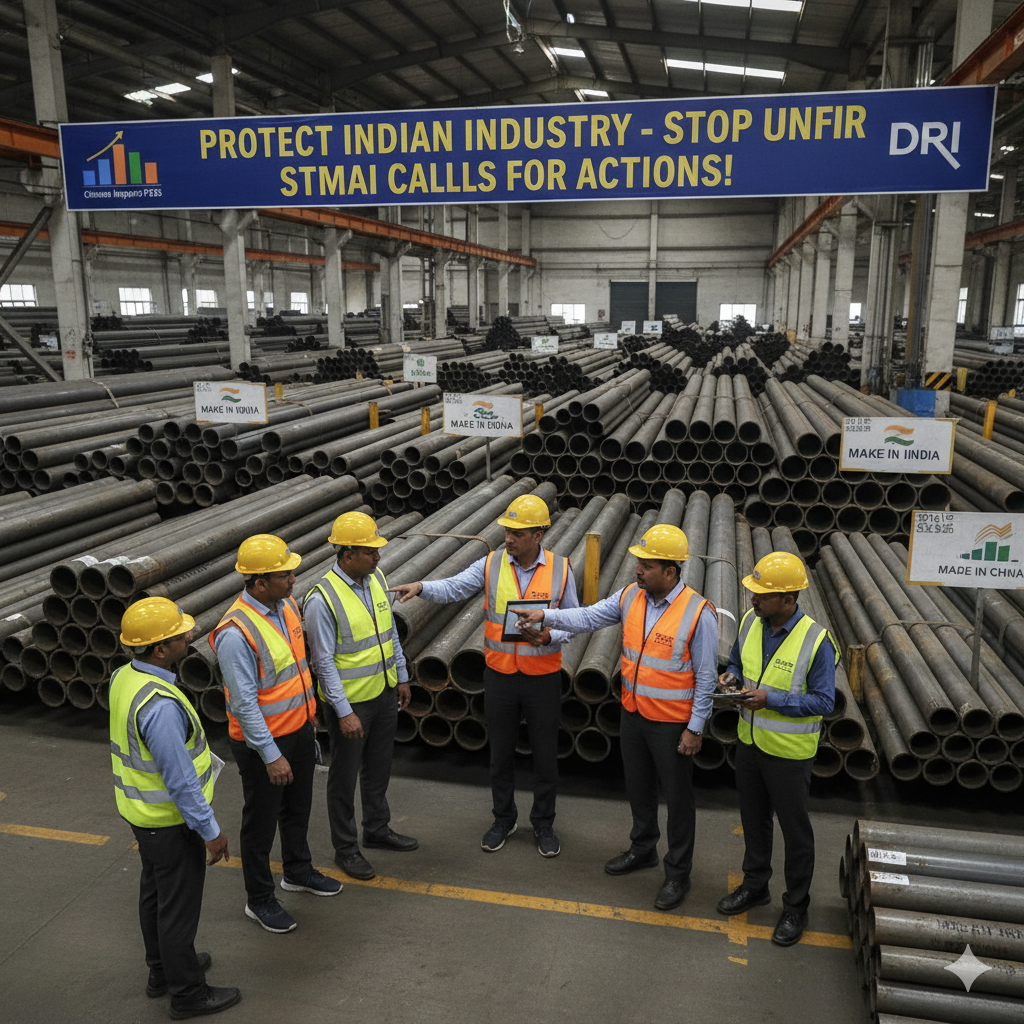
A significant concern has arisen in India’s industrial sector as imports of seamless pipes and tubes from China have reportedly doubled in the current fiscal year (FY25), reaching an estimated total of 4.97 lakh tonnes. This surge has prompted the Seamless Tube Manufacturers’ Association of India (STMAI) to urgently call on the government for stricter protective measures, asserting that the influx of low-cost Chinese goods is severely undermining the local industry.
Ample Domestic Capacity Under Threat
The STMAI emphasizes that India possesses more than enough domestic capacity to meet the country’s demand for seamless pipes and tubes. The industry has an installed capacity of approximately 1.95 million metric tonnes (MMT), which is substantially greater than the total national demand of 1.32 MMT. Despite strong support from government initiatives like ‘Make in India,’ which encouraged local manufacturers to invest in producing import-substitute items such as drill pipes and oxygen cylinder pipes, a large portion of domestic capacity remains underutilized due to the foreign competition.
The domestic industry argues that existing safeguard measures intended to restrict Chinese imports have been largely ineffective, leading to the exponential rise in foreign pipe arrivals over the last few years.
Allegations of Unfair Trade Practices
Central to the domestic manufacturers’ plea are allegations of unfair trade practices. The STMAI claims that Chinese importers are declaring inflated invoice values during customs clearance procedures. Crucially, these same products are then allegedly sold within the Indian market at prices significantly lower than those offered by domestic seamless pipe producers.
The association contends that this practice fundamentally violates fair trade principles and places local manufacturers at a severe competitive disadvantage in their own country. In response, the STMAI has urged the government to implement immediate and strict curbs on the imports and has specifically requested that the Directorate of Revenue Intelligence (DRI) launch a thorough investigation into the reported pricing and customs declaration discrepancies.