admin
admin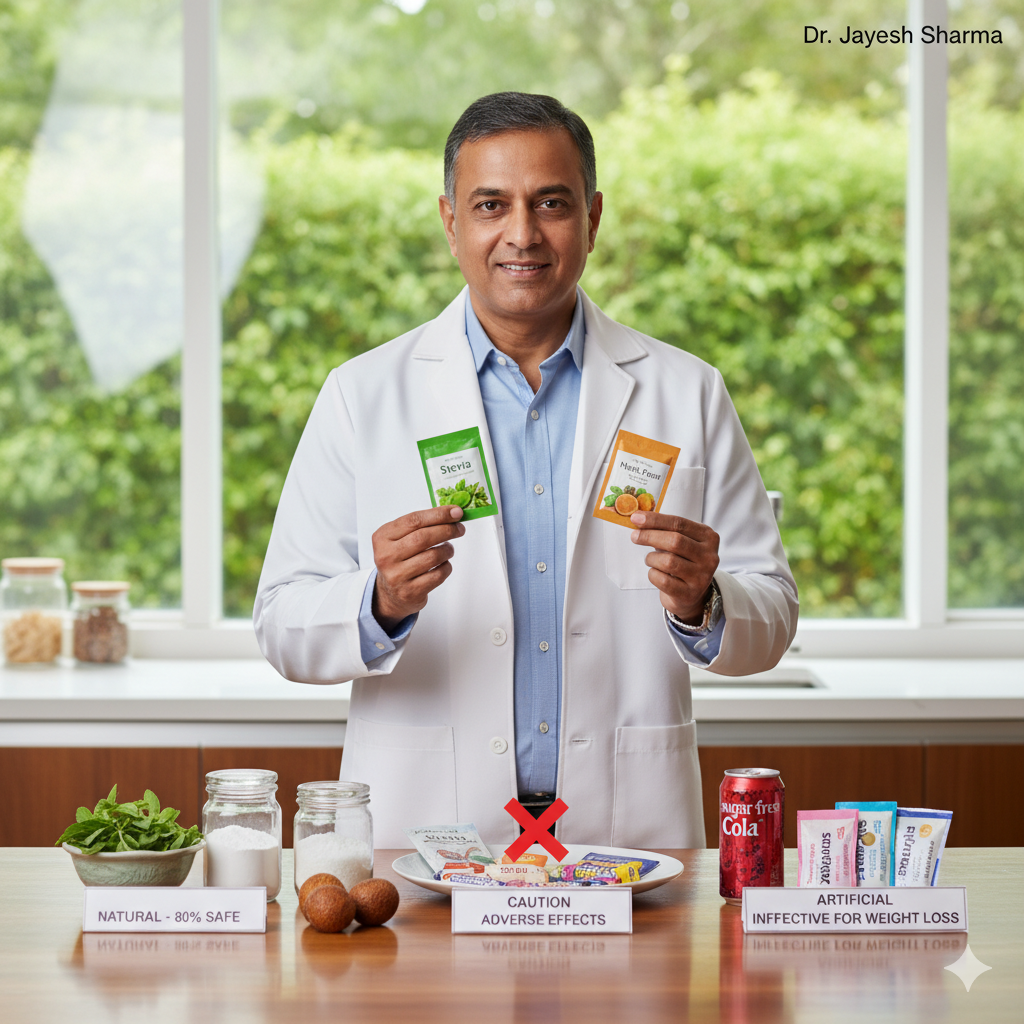
A Raipur-based Consultant Surgical Oncologist, Dr. Jayesh Sharma, recently shared his perspective on sugar substitutes, classifying them into different safety tiers and advising consumers on which ones to choose or avoid for better health.
The Most Recommended (80% Safe)
Dr. Sharma places Stevia and Monk Fruit at the top of the list, stating they are “about 80% safe” as sugar substitutes.
- Rationale: They are natural, plant-based sweeteners that contain no calories and do not cause a spike in blood sugar levels.
- Cooking: Stevia is noted to be stable enough for use in cooking.
Low-Calorie Substitutes: Use with Caution
The surgeon expressed reservations about low-calorie molecules like sucralose and erythritol (often found in “sugar-free” sweets and candies).
He noted that while they are absorbed minimally and have low or zero calories, they can cause mild adverse effects on the stomach. The article implies that compared to these, regular sugar is sometimes preferable.
Artificial Sweeteners: Ineffective for Weight Loss
Dr. Sharma also discussed classic artificial sweeteners like those in pouches, sugar-free colas, saccharin, and aspartame.
- Safety: While he noted they are not highly toxic and do not cause cancer, they are not a reliable path to weight loss.
- Adverse Effects: They can impact stomach bacteria and cause some people to feel increased hunger after consumption, undermining their benefit for calorie reduction.
The overall message is that while avoiding excessive sugar is important, natural, plant-based alternatives like Stevia and Monk Fruit offer the healthiest method of satisfying a sweet craving.