admin
admin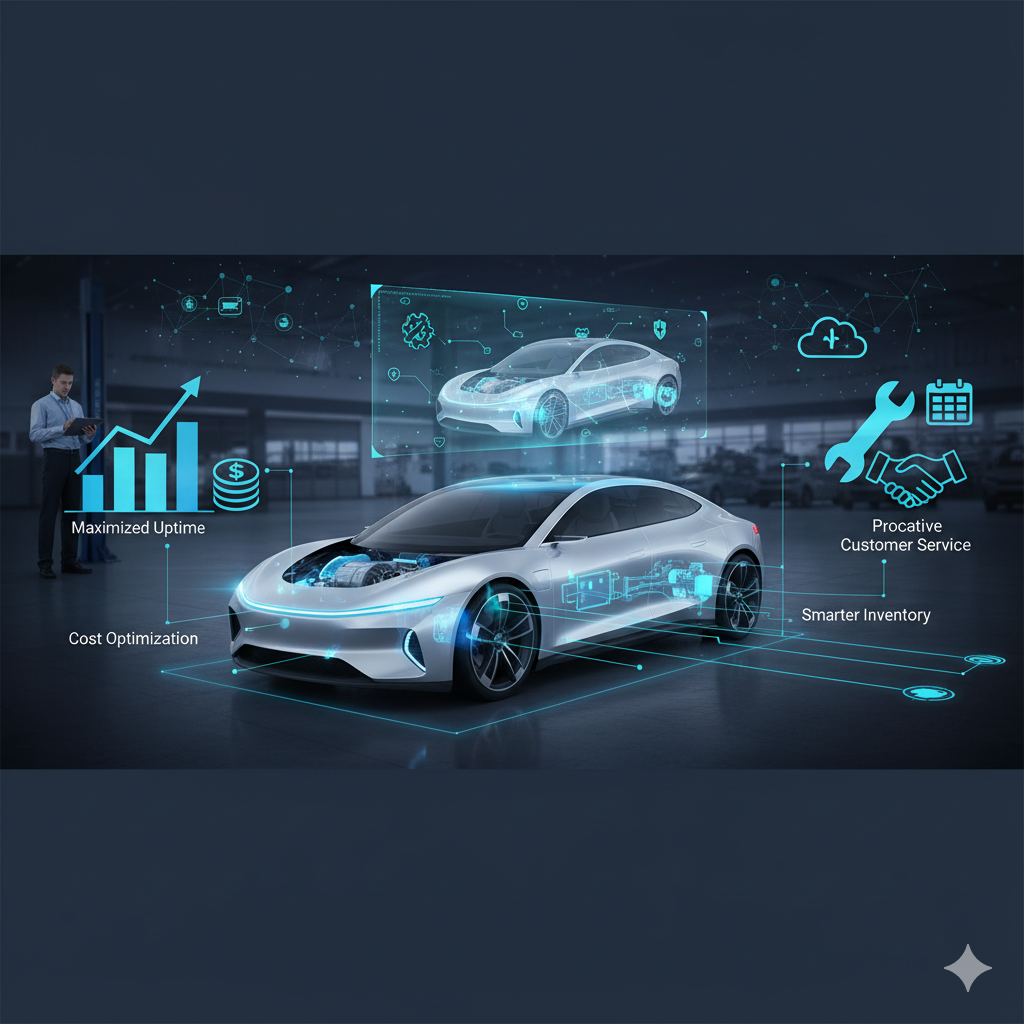
The automotive sector is undergoing a profound transformation, moving beyond purely mechanical systems into a new era of software-defined, connected vehicles. This technological evolution demands a shift in how we approach vehicle maintenance and reliability. The traditional methods—reactive and preventive maintenance—are proving increasingly inefficient in this data-rich landscape.
Reactive maintenance, where repairs occur only after a failure, is disruptive, costly, and inherently unsafe. Meanwhile, time-based preventive maintenance, which relies on fixed schedules, often leads to unnecessary part replacements, wasted resources, and labor costs, as it fails to account for the real-world condition of components.
The solution is Predictive Maintenance (PdM), a proactive strategy powered by data science and artificial intelligence that anticipates failures before they happen. This method is revolutionizing vehicle uptime, operational safety, and overall cost efficiency for manufacturers, fleet managers, and individual drivers alike.
The Technology Triad: IoT, AI, and Real-Time Data
Predictive maintenance hinges on the integration of three core technologies:
- Internet of Things (IoT) Sensors: Modern vehicles are equipped with countless sensors that constantly monitor critical operational parameters, such as engine temperature, brake wear, battery health, and abnormal vibration patterns.
- Real-Time Data Analytics: These vast streams of telemetry data are collected and transmitted to the cloud.
- Artificial Intelligence (AI) and Machine Learning (ML): Sophisticated ML algorithms analyze this real-time data to identify subtle deviations from normal operating conditions. By comparing current performance against historical failure data, these models can accurately forecast the remaining useful life of vital components.
This intelligent analysis allows systems to predict a component failure days or weeks in advance, enabling timely and targeted interventions.
Multifaceted Benefits Across the Mobility Ecosystem
The adoption of PdM delivers significant advantages to various stakeholders:
For Fleet Operators and OEMs
- Maximized Uptime: By predicting issues, maintenance can be scheduled during planned downtime or low-demand periods, ensuring vehicles stay on the road when they are needed most.
- Cost Optimization: Eliminating unnecessary preventative parts replacements and preventing minor faults from escalating into catastrophic, expensive repairs saves money on parts, labor, and potential recovery services.
- Enhanced Safety: Early detection of critical issues, like declining braking efficiency or overheating systems, significantly reduces the risk of road accidents, improving overall driver and vehicle safety.
For the Aftermarket and Service Providers
- Smarter Inventory: Predictive diagnostics provide visibility into which parts are likely to be needed and when. This allows service centers and suppliers to optimize their stock levels, minimizing waiting times and streamlining the repair process.
- Proactive Customer Service: Service centers can engage customers proactively, offering personalized maintenance plans based on the vehicle’s real-time health data, which fosters trust and loyalty.
The Future: Self-Aware Vehicles and Digital Twins
Looking ahead, Digital Twin technology is set to accelerate the capabilities of predictive maintenance. A digital twin is a virtual replica of the physical vehicle, allowing manufacturers and service providers to run simulations, test various scenarios, and continuously refine maintenance models without impacting the real-world asset.
The ultimate vision for mobility is a self-aware vehicle that not only monitors its own health but also autonomously communicates with service networks to schedule its own appointments. By embracing this data-driven paradigm shift, the automotive industry can usher in an era defined by unprecedented efficiency, improved safety, and true vehicle reliability.