admin
admin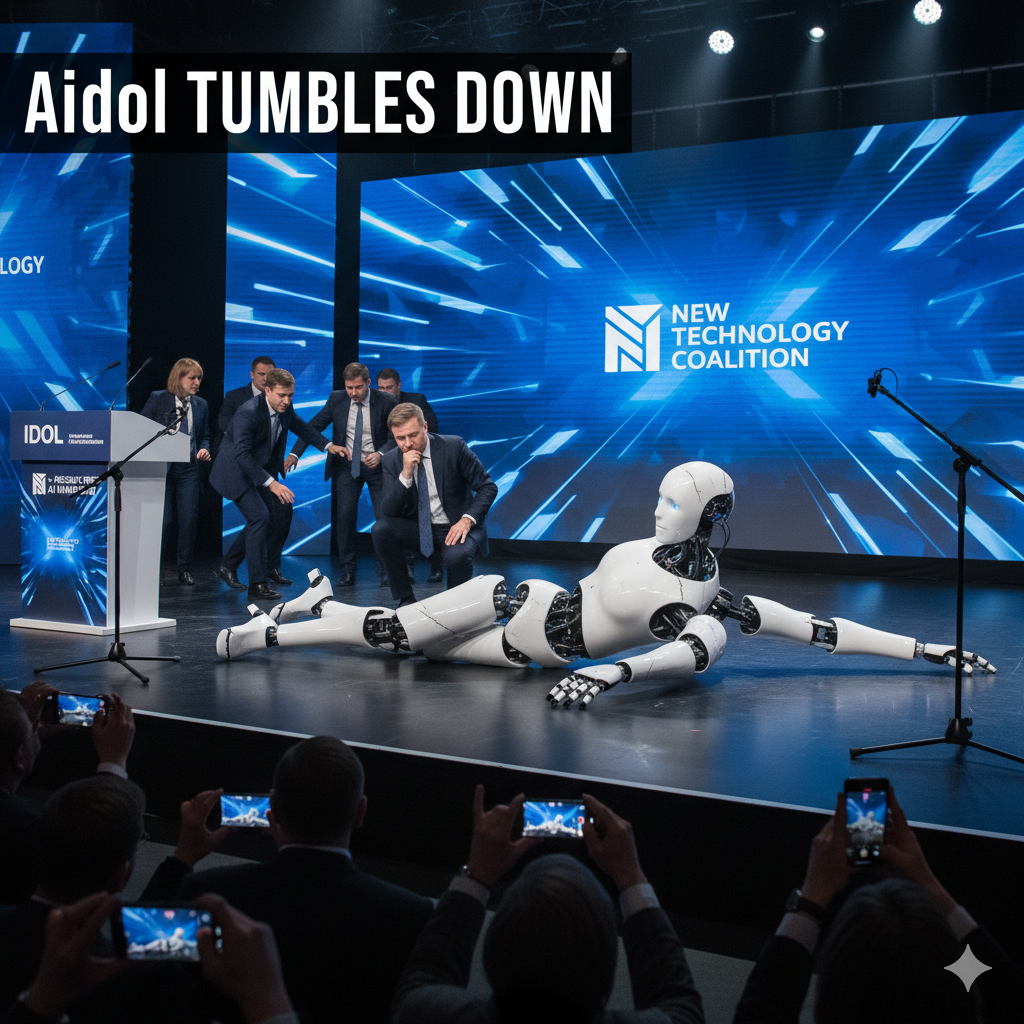
A Russian robotics company called Idol faced an unexpected challenge during the public demonstration of its new AI-powered humanoid robot, named AIdol. The machine, which had been presented at a forum organized by the New Technology Coalition, was intended to be showcased as Russia’s first anthropomorphic robot.
However, during its debut on stage, the AIdol unit lost its stability, resulting in a fall that damaged the machine in front of the assembled crowd. The mishap highlighted the significant engineering difficulties that persist in developing bipedal, fully functioning humanoid robots capable of consistently maintaining balance—a common hurdle across the global industry.
Following the event, Idol CEO Vladimir Vitukhin commented on the incident with a philosophical perspective. He viewed the error as an integral part of the development process, suggesting that “a successful mistake turns into knowledge, and an unsuccessful one turns into experience,” and expressed hope that this setback would ultimately serve as a valuable lesson for the team.
The incident is part of a pattern seen throughout the robotics sector, where public demonstrations of nascent bipedal technology often include a moment of instability, underscoring that the goal of creating a perfectly steady, walking machine remains a complex engineering feat.