admin
admin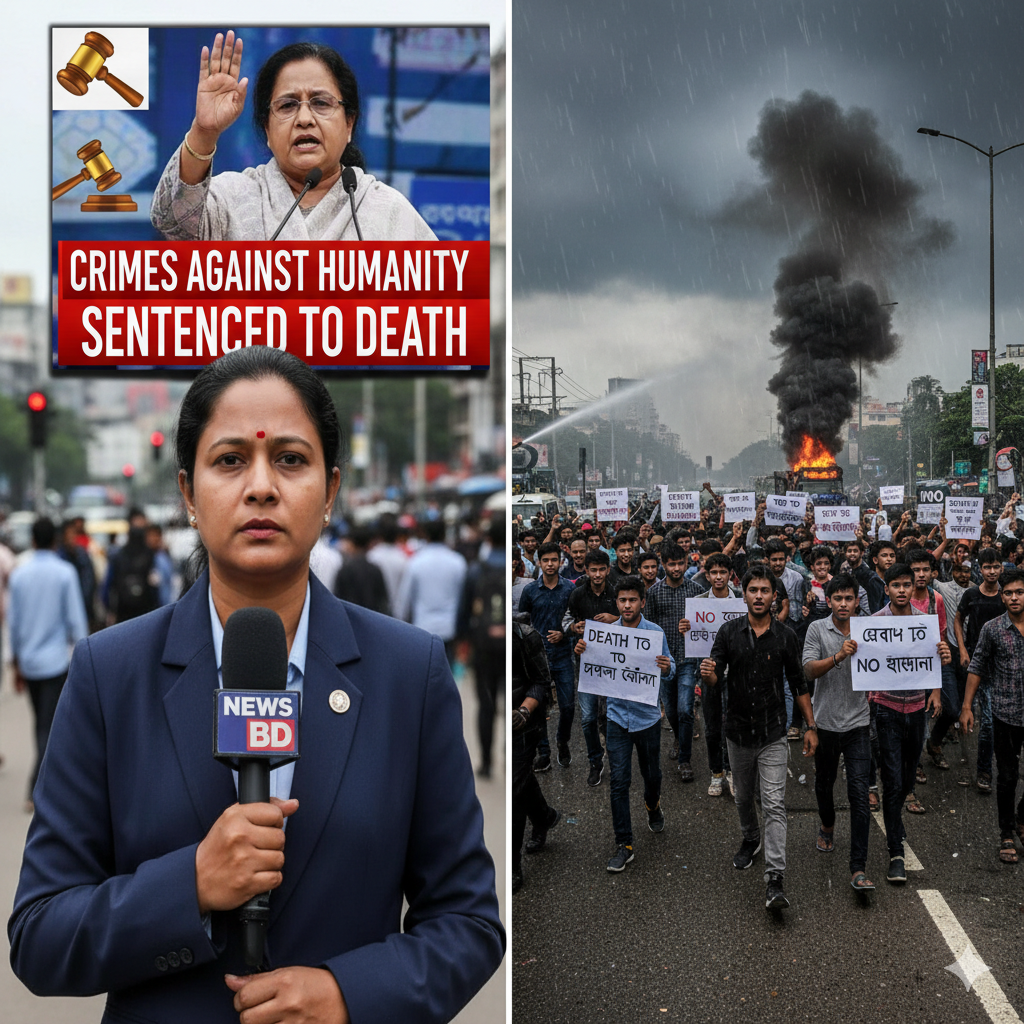
Dhaka, Bangladesh — The International Crimes Tribunal (ICT-BD) in Dhaka has sentenced Bangladesh’s deposed Prime Minister Sheikh Hasina to death in absentia after convicting her of crimes against humanity. The verdict, announced on Monday, concludes a months-long trial related to the deadly crackdown on a massive student-led uprising in 2024 that ultimately led to the fall of her government.
Key Details of the Verdict:
- Conviction: Hasina was found guilty of committing crimes against humanity, including incitement, ordering killings, and failing to prevent atrocities committed by security forces during the unrest, often referred to as the “July Uprising.”
- Basis of Judgment: The three-judge tribunal, led by Justice Golam Mortuza Mozumder, stated that the former prime minister directly ordered the use of lethal weapons, helicopters, and drones against unarmed civilian protesters.
- Co-Accused: Former Home Minister Asaduzzaman Khan was also sentenced to death in absentia. The former police chief, Chowdhury Abdullah Al-Mamun, received a five-year prison sentence after pleading guilty and cooperating as a state witness against the former Prime Minister.
- Casualties: The violence during the crackdown resulted in a high number of deaths, with reports suggesting up to 1,400 people may have been killed.
Hasina’s Response and Current Status
Sheikh Hasina, who fled Bangladesh in August 2024, is currently residing in exile in India. She and her supporters have vehemently rejected the ruling and the tribunal’s legitimacy.
In a statement following the verdict, Hasina:
- Denounced the judgment as “biased” and “politically motivated.”
- Called the ICT a “rigged tribunal established and presided over by an unelected government with no democratic mandate.”
- Claimed she was denied a “fair chance” to defend herself in court.
The interim government in Bangladesh, led by Nobel Laureate Muhammad Yunus, had sought Hasina’s extradition from India, but the requests have so far been ignored.
Political Context
The verdict has intensified political tensions in the country. The former ruling Awami League party, which has been banned by the interim government, called for a nationwide shutdown in protest. The judgment comes ahead of parliamentary elections expected in early February, which the Awami League is currently barred from contesting. Security remains heightened across Dhaka and other regions to prevent unrest following the highly anticipated ruling.