admin
admin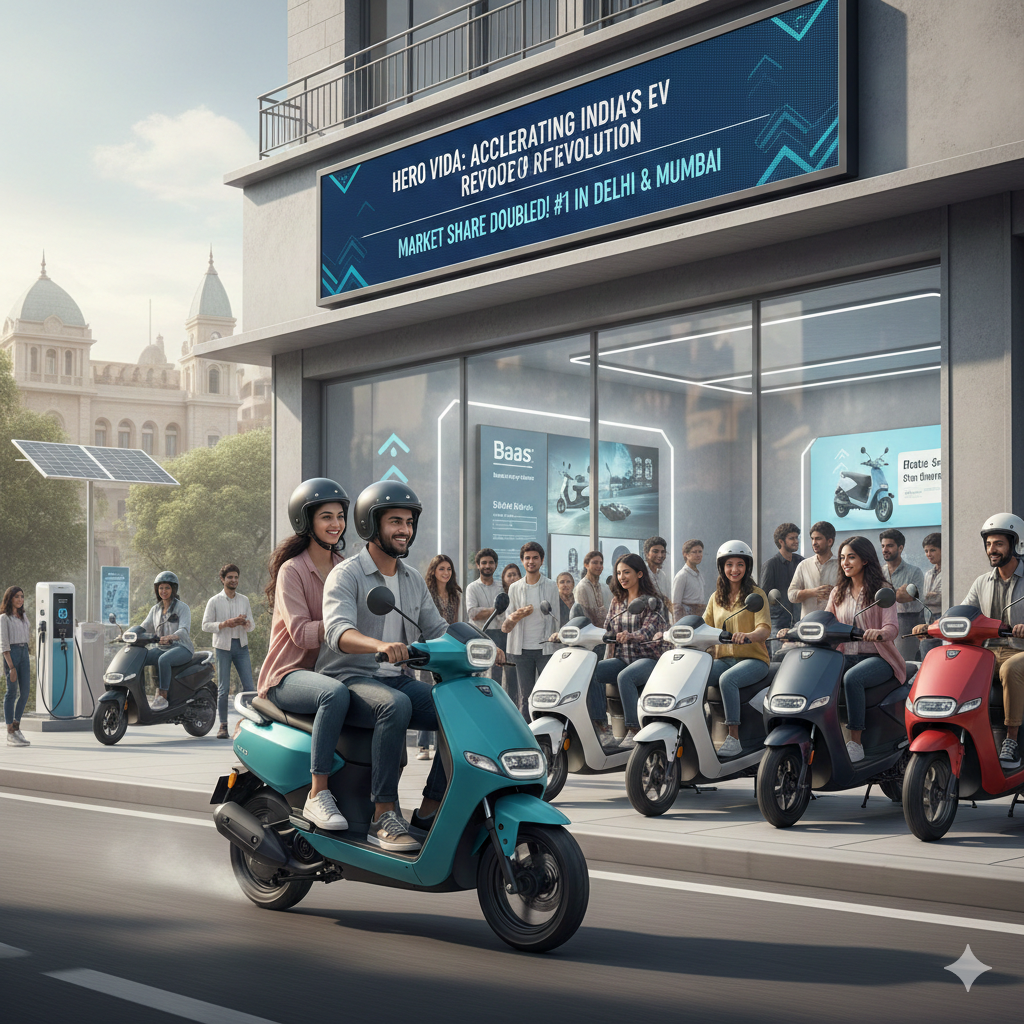
Hero MotoCorp’s electric scooter division, VIDA, has demonstrated remarkable growth, significantly boosting its presence in India’s electric two-wheeler (e2w) segment. The surge in both customer inquiries and sales is largely credited to the introduction of a highly competitive mass-market variant and a flexible ownership option.
BaaS Fuels Accessibility and Sales
A primary catalyst for this acceleration is the Battery-as-a-Service (BaaS) model. By separating the cost of the battery from the scooter, this option allows the initial purchase price of the VIDA VX2 to drop below the crucial ₹1 lakh threshold, making electric mobility far more accessible to a wider demographic.
While some market analysts have expressed reservations about the long-term effectiveness of BaaS as a standalone sales driver, stating that customers often ultimately prefer the standard product, the model has undeniably increased store traffic and consumer interest for Hero.
Significant Market Share Gains
VIDA’s strategic pivot to the mass segment is yielding concrete results in its market standing:
- The company’s share in the domestic e2w market has nearly doubled, climbing from 6.8% in the corresponding quarter of the previous fiscal year to approximately 12% in the July-September (Q2) quarter.
- The electrification trend is rapidly impacting Hero’s overall scooter portfolio. During Q2, electric models accounted for one out of every four scooters sold by Hero MotoCorp (including both electric and traditional internal combustion engine models).
- The brand achieved a major milestone in July, crossing the 10,000 unit monthly sales mark for the first time, and has maintained strong volumes since.
- VIDA has established a strong foothold in key urban centers, at times topping the sales charts in cities like Delhi and capturing an estimated 20% market share in Mumbai.
Outpacing the Competition
The brand’s robust performance has allowed it to recently overtake key competitors. Notably, industry registration data for November indicated that VIDA surpassed the sales figures of previously dominant market leader Ola Electric by over a thousand units. This shift comes as Ola navigates challenges related to product quality and service network issues.
Path to Breakeven and Future Growth
While Hero’s electric division is gaining momentum, the company faces two key challenges to sustain its growth and achieve profitability:
- Profitability Target: Hero MotoCorp has previously stated that its e2w business requires monthly sales volumes of 25,000 to 30,000 units to reach the break-even point within its two-year timeline.
- Network Expansion: To fully capitalize on its product success, the company must commit significant investment to rapidly expand its sales and charging infrastructure network to match the reach of legacy two-wheeler manufacturers like Bajaj and TVS.
Despite the hurdles, the early success of the mass-market variants and the affordability offered by the BaaS option position VIDA as a critical component in Hero MotoCorp’s future strategy.