admin
admin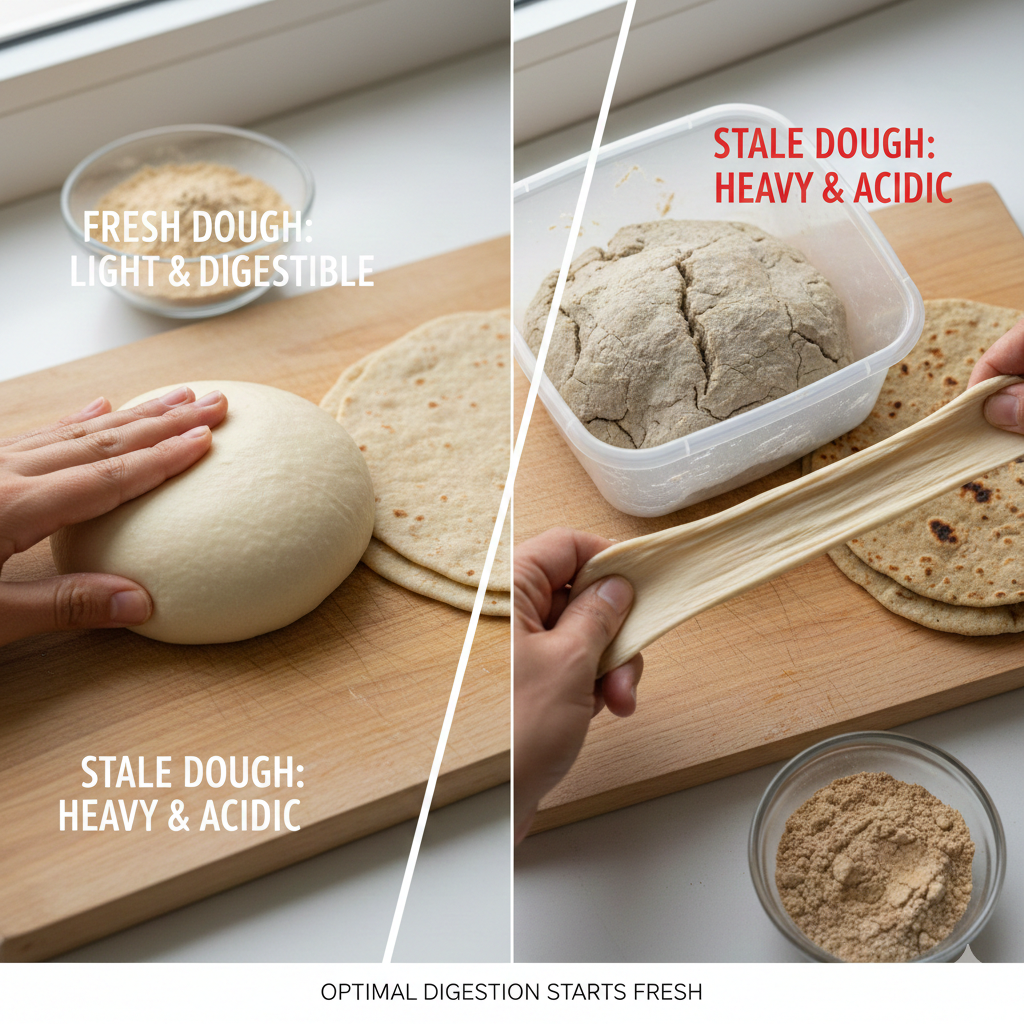
Many home cooks, prioritizing convenience, often prepare large batches of wheat dough (atta) and store them in the refrigerator for days. However, nutritional experts caution that this common habit may inadvertently be compromising the health and digestibility of your daily meals, particularly flatbreads like rotis.
The core concern revolves around gluten, the protein network naturally present in wheat flour.
The Gluten Effect of Storing Dough
According to nutrition and dietary experts, the widely held belief that wheat itself is the problem behind post-meal discomfort is often misguided. Instead, the issue frequently lies in the preparation and storage of the dough.
When wheat flour is mixed with water, the gluten begins to develop. If the resulting dough is allowed to sit for extended periods—such as 10 to 48 hours in a fridge—the gluten strands continue to relax and expand significantly.
- Fresh Dough: When dough is prepared and used quickly (ideally within 10–15 minutes), the gluten structure is softer and less developed. This results in rotis that are lighter and much easier for the stomach to break down, leading to smoother digestion and reduced risk of bloating.
- Stale Dough: Dough that has been stored for long periods becomes overly stretchy and rubbery due to excessive gluten release. This rigid structure forces the digestive system to work harder, which can be the direct cause of heaviness and discomfort after eating.
Gut Health Risks from Fermentation
Beyond structural changes, storing dough for too long, whether at room temperature or even refrigerated, can lead to subtle fermentation.
This fermentation process can cause the dough to become slightly acidic over time. Consuming this stale, acidic dough is often linked to common digestive complaints, including:
- Gas
- Acidity
- General gut discomfort
Experts suggest that individuals who frequently report that “wheat doesn’t suit them” may simply be reacting negatively to the challenging texture and potential acidity of stale dough, rather than a true intolerance to fresh wheat.
Nutritional Value of Fresh Flour
The quality of the flour (atta) itself is also a factor. Freshly milled wheat flour retains its natural oils, unique aroma, and full nutrient profile, which includes fibre, B vitamins, and essential minerals.
If flour is stored for an excessively long time, particularly beyond a few weeks (e.g., 15 to 30 days), the natural oils within it can begin to oxidize. This oxidation diminishes the flour’s freshness, flavour, and overall nutritional potency. Using fresh atta ensures you are consuming the grain when its antioxidant levels are at their peak.
Tips for Optimal Dough Preparation and Digestion
To maximize the nutritional benefits of wheat and ensure a comfortable digestion, experts offer the following preparation guidelines:
- Use it Immediately: Knead the dough and use it within 10 to 15 minutes. Avoid preparing the dough hours in advance or storing it overnight in the refrigerator.
- Coat the Grains: Before adding water, try mixing a teaspoon of oil directly into the dry flour. This coats the grain particles and helps inhibit the excessive development of gluten, leading to a softer, more manageable dough.
- Choose Older Varieties: Some individuals find that older or specialized wheat varieties, such as khapli or sharbati, are naturally gentler on the stomach compared to modern strains.
- Manage Flour Storage: Always store atta (the flour itself) in small, manageable batches and aim to finish the entire batch within one month for the best freshness and nutritional value.