admin
admin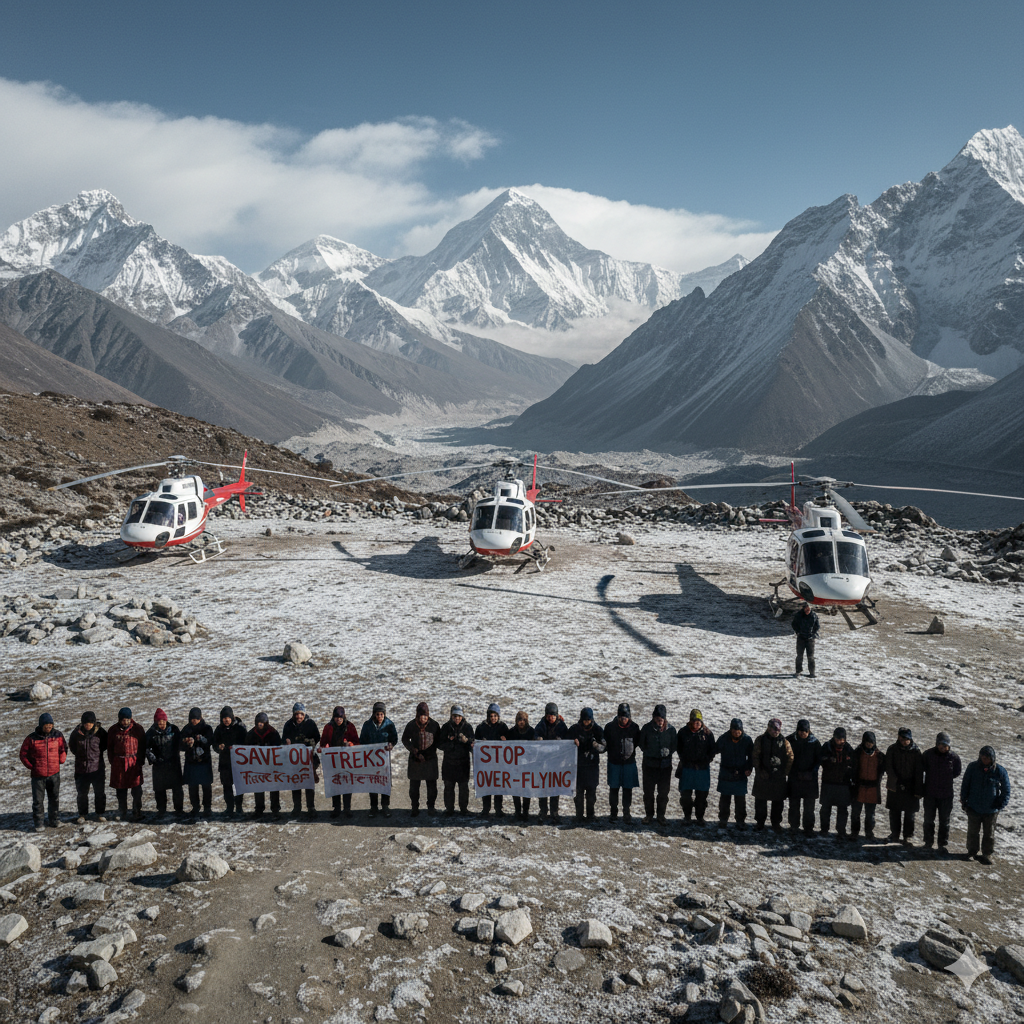
Aviation companies in Nepal have reinstated essential helicopter flights for emergency rescues in the Mount Everest region, a service that was recently paused due to protests from local communities. The suspension, which lasted for several weeks, occurred when residents blocked landing areas to voice their concerns over environmental degradation and the negative economic impact of the air traffic.
While helicopters are crucial for conducting time-sensitive medical and rescue evacuations in this challenging, road-less mountainous terrain, their commercial use has become a major source of tension. Wealthy tourists and climbing expeditions frequently charter these aircraft to bypass the traditional two-week trek to Everest Base Camp, a shortcut costing approximately $1,000 per person.
This practice, however, circumvents the numerous villages along the conventional hiking trail, resulting in a significant loss of vital income for local businesses and trekking guides who depend on the revenue generated by overland trekkers.
In early January, the Airlines Operators Association of Nepal (AOAN) halted all flights after protestors prevented landings. Although standard commercial air travel to the Everest region remains restricted, rescue flights have now resumed on a humanitarian basis, as confirmed by an AOAN official on January 27.
The initial lack of emergency evacuation options had a direct impact on climbing safety, notably influencing German mountaineer Jost Kobusch’s decision to call off his solo winter ascent. Given that the Everest region welcomes over 50,000 visitors annually, reliable rescue operations are vital.
Aviation officials and local community representatives are currently engaged in negotiations. The goal is to establish a sustainable framework that harmonizes the demands of the aviation and tourism industries with the economic interests of the local residents, ultimately aiming for safe and responsible operations in the Sagarmatha National Park.