admin
admin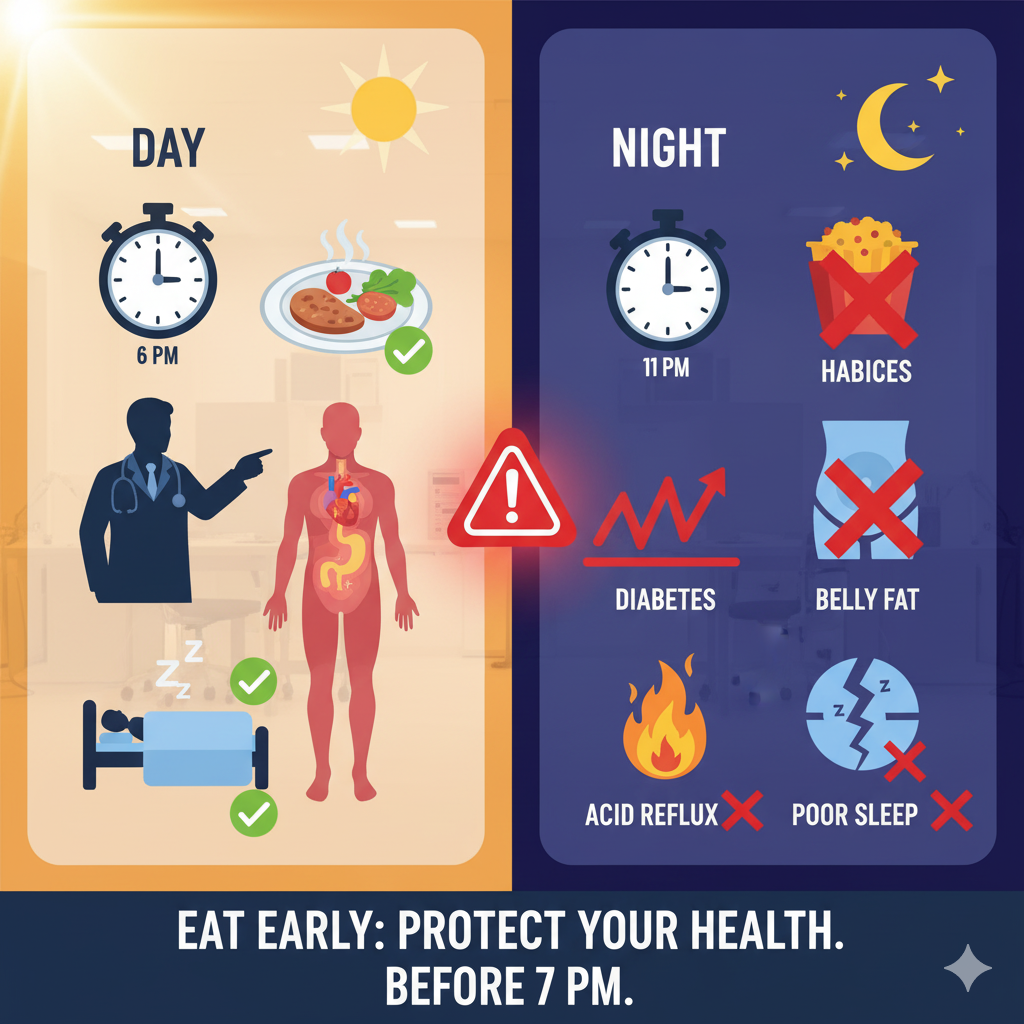
A specialist in gastroenterology and hepatology at Fortis Vasant Kunj, Dr. Shubham Vatsya, has issued a warning regarding the practice of habitual late-night dinners, emphasizing that it can silently undermine one’s health. He stresses that the human body operates on a circadian rhythm, a natural biological clock, which governs when the body is most efficient at digesting food.
Biological Disruption and Health Risks
According to Dr. Vatsya, the body’s digestive hormones and cells are designed to be active during the day and rest at night. When a person eats dinner late, their metabolic rate is at its lowest. This forces the digestive system to work against its natural rhythm, which he equates to “inviting diseases.”
The most significant health consequences of this habit include:
- Metabolic Strain: Eating late increases the risk of blood sugar spikes and higher insulin levels. In the long term, this elevates the overall risk of developing diabetes.
- Weight Management: The practice is linked to the accumulation of excessive belly fat, which is typically resistant to efforts to shed it.
- Digestive and Sleep Quality: Late meals can exacerbate issues like acidity and acid reflux. Furthermore, they are detrimental to the quality of sleep.
- Long-Term Organ Protection: Prioritizing early dinner is crucial for protecting the health of the heart and the gut.
The Call for Early Dinner
The medical advice is clear: eating an early dinner is not merely a diet suggestion but a biological necessity. Dr. Vatsya suggests that eating dinner before 7 PM is one of the simplest and most effective forms of self-care, promoting better sleep, reducing reflux, and protecting the long-term health of vital organs.