admin
admin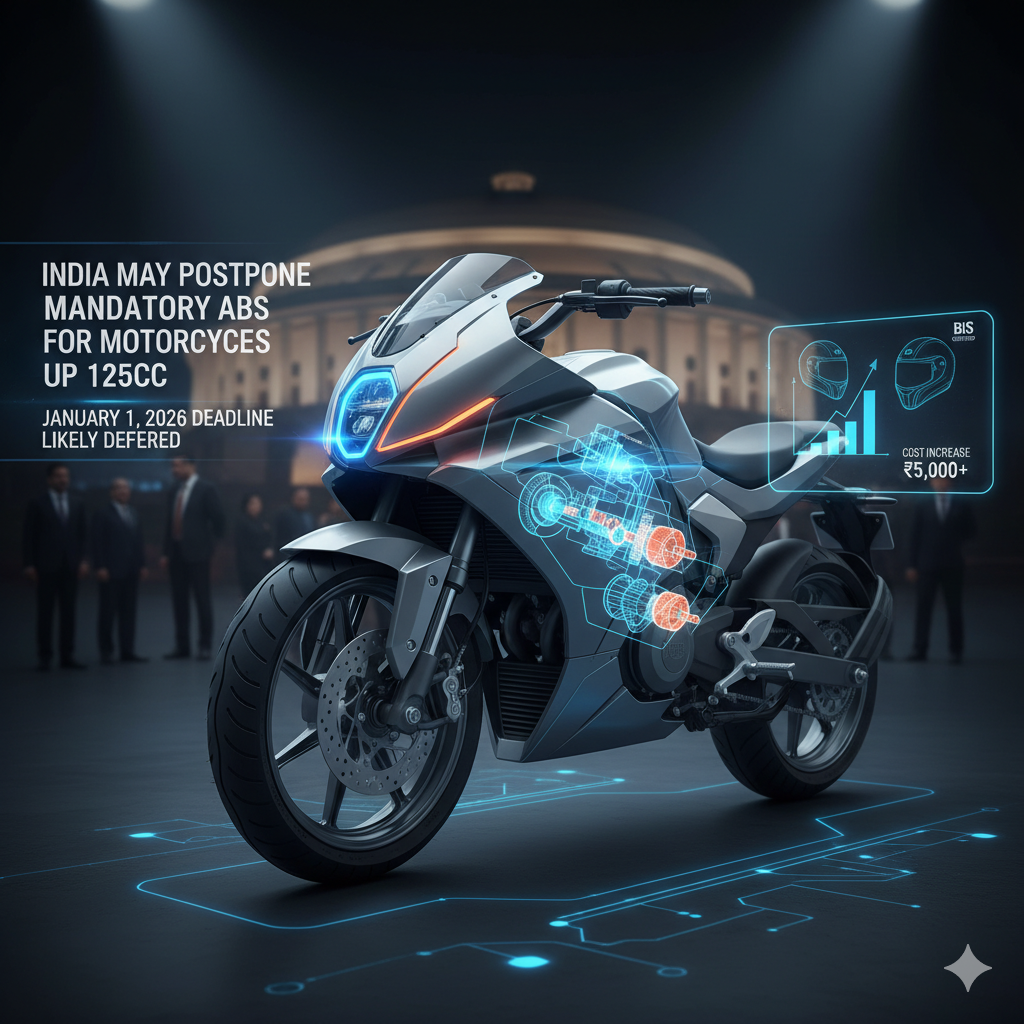
The Central Government of India is reportedly leaning toward postponing the implementation of the Anti-lock Braking System (ABS) mandate for two-wheeled vehicles with an engine displacement of up to 125 cubic centimeters (cc). This safety regulation was initially planned to take effect on January 1, 2026.
ABS is an essential safety technology that prevents wheels from locking and skidding during sudden, hard braking, thereby greatly minimizing accident risks. While two-wheelers exceeding 150cc already require this feature, its extension to the high-volume, entry-level segment is now facing obstacles.
Industry Concerns Drive Potential Delay
The proposal to equip bikes and scooters under 125cc with ABS has met resistance from automotive manufacturers, notably the Society of Indian Automobile Manufacturers (SIAM). Their key reservations, which were presented to Road Transport Minister Nitin Gadkari, center on two primary issues:
- Cost Increase: Manufacturers argue that integrating ABS would inflate the retail price of entry-level models by an estimated ₹5,000 or more, potentially dampening demand for these mass-market vehicles.
- Efficacy in Low-Power Models: Doubts were raised regarding the practical safety benefit and effectiveness of an ABS system on smaller, lower-speed commuter bikes.
In response to these concerns, the Minister suggested that the industry collaborate with the Automotive Research Association of India (ARAI), the nation’s official testing and certification body, to scientifically validate the feature’s performance on this specific category of vehicles.
Revised Timeline and Future Outlook
While the government’s transport ministry confirms its long-term commitment to introducing mandatory ABS across all two-wheelers—and is currently monitoring industry readiness—sources indicate that the January 2026 timeline is highly improbable.
If ARAI proceeds with the required testing, which could take up to two months, a minimum transition period of approximately one year would likely be necessary for manufacturers to overhaul production and supply chains, pushing the final rollout well beyond 2026. Furthermore, some government officials are reportedly concerned that introducing the cost hike could negate a recent positive surge in demand for entry-level models.
The final official notification is awaited and will confirm the revised deadline, which may also include a provision for manufacturers to supply two BIS-certified helmets with every new purchase.