admin
admin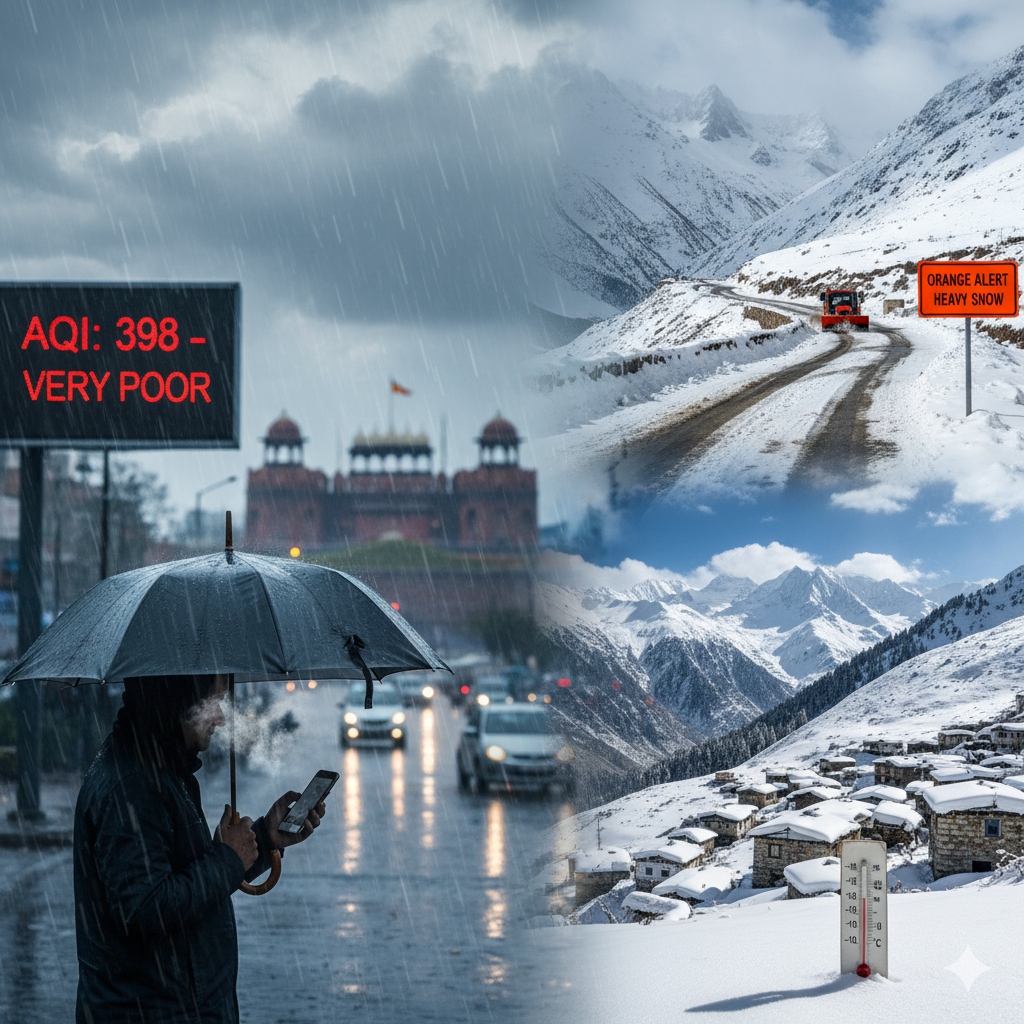
A powerful surge of winter weather swept across North India on December 27, 2024, bringing frigid temperatures, disruptive snowfall, and challenging conditions to several states, including the National Capital Territory.
Capital Weather and Air Quality
Delhi witnessed an abrupt shift in weather with early morning rainfall and lightning, intensifying the already persistent cold wave. The city’s minimum temperature was recorded at 12 degrees Celsius, with forecasts predicting a range of 8 to 23 degrees Celsius for the day. Compounding the cold, Delhi’s air quality remained a significant concern, registering an alarming Air Quality Index (AQI) of 398, classified as ‘very poor.’
Snowfall and Travel Disruption in the Himalayas
The mountain states were particularly hard-hit, facing heavy precipitation and freezing conditions that severely impacted mobility and daily life.
Himachal Pradesh
The India Meteorological Department (IMD) issued an Orange Alert for Himachal Pradesh, warning of heavy snow and rain across its mid and high-hill regions through December 28. The accumulating snow had already resulted in the closure of 157 roads across the state. Temperature extremes were notable: the town of Tabo in Lahaul and Spiti recorded the state’s lowest at a chilling -10.6 degrees Celsius, while Una registered the highest at 23.6 degrees Celsius.
Uttarakhand
Neighboring Uttarakhand also anticipated significant weather events, with light to moderate rain and snowfall expected in high-altitude areas on December 27 and 28. Districts such as Uttarkashi, Chamoli, and Pithoragarh were forecast to receive moderate rainfall. The harsh weather is affecting popular towns like Dehradun and Joshimath, and the heavy snow is isolating remote villages, thereby disrupting essential services and transportation networks.
Jammu and Kashmir
The region of Jammu and Kashmir experienced extreme cold, with temperatures plummeting as low as -6 degrees Celsius. This deep freeze, along with the forecasted low of 8 degrees Celsius during the day, has presented significant obstacles for disaster management teams attempting to reach and assist affected communities.
Local and regional authorities across the affected areas are coordinating efforts to restore connectivity, manage disaster relief operations, and ensure necessary aid reaches residents and travelers facing challenging winter conditions.