admin
admin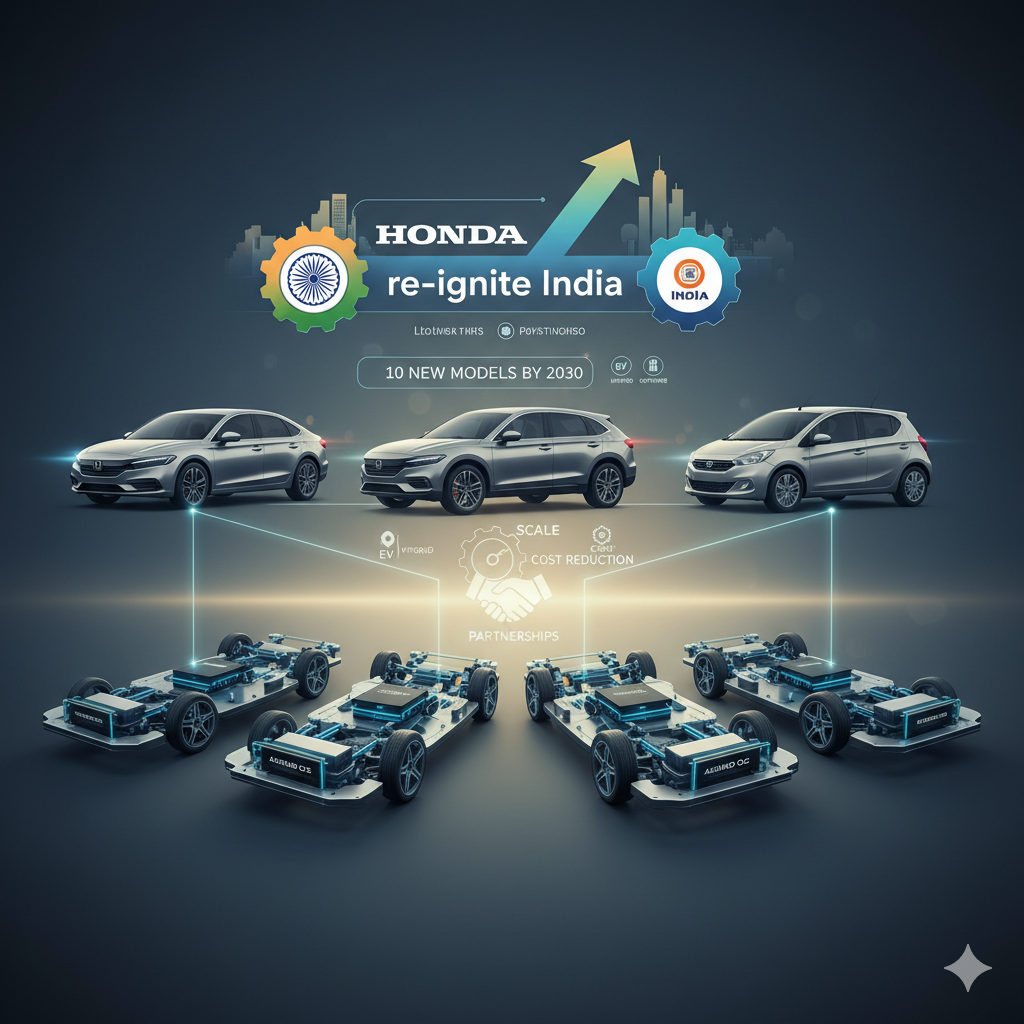
This move is a core part of Honda’s ambitious “re-ignite India” plan, which targets the launch of 10 new models by 2030. The primary motivations for seeking partnerships with Indian Original Equipment Manufacturers (OEMs) are to:
- Achieve Scale: Quickly build the necessary production volume to make its India business viable.
- Reduce Costs: Share the burden of rising capital expenditure, particularly in the development of Electric Vehicles (EVs), Software-Defined Vehicles (SDVs), and advanced electronics.
- Regain Competitiveness: Position the brand strongly in India, which has been identified as a core pillar of its global revival strategy following pressures in key markets like the US and China.
The potential offerings for sharing are wide-ranging and could include:
- Sharing of platforms and powertrains.
- Badge-engineered models (complete vehicle sharing).
- Access to Honda’s expertise in hybrid systems.
- In the future, access to the new ASIMO software operating system that will underpin its upcoming ‘0 Series’ EVs.
This willingness to collaborate reflects a changing automotive landscape, where alliances (like those between Maruti-Toyota or Renault-Nissan) are essential for splitting development costs and maximizing economies of scale. While the article notes unconfirmed whispers of exploratory conversations with companies like Tata Motors, it confirms that Honda is finally open to partnerships previously considered unimaginable.