admin
admin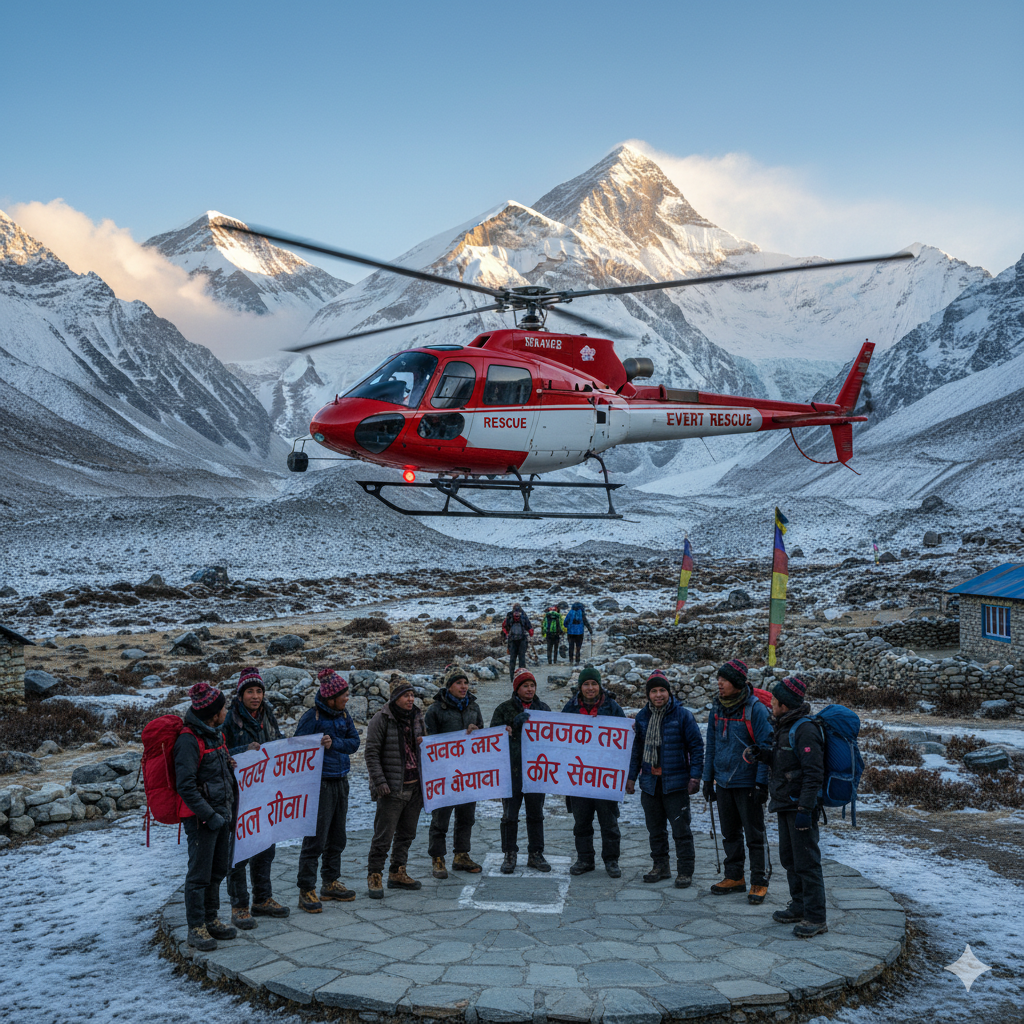
Nepal has reinstated essential helicopter rescue flights to the Mount Everest region, bringing an end to a suspension period caused by demonstrations from local residents. While humanitarian rescue operations are now active, commercial helicopter services remain restricted as negotiations continue to resolve the underlying conflict.
The protests, which had halted all flights, were primarily driven by a combination of economic and environmental grievances. Local communities voiced concerns that the popular use of helicopters to transport wealthy tourists and mountaineering teams directly to Everest Base Camp bypasses the traditional trekking routes.
This practice, which offers a shortcut for a significant fee (reportedly around $1,000), deprives the local population—including guides, porters, and small businesses—of a vital revenue stream generated by trekkers who typically spend days in the villages along the traditional overland journey.
The Airlines Operators Association of Nepal (AOAN) confirmed the resumption of rescue flights on humanitarian grounds after protesters had initially blocked landing sites. The suspension had raised serious safety concerns for climbers; for instance, the lack of an emergency evacuation option was cited by German mountaineer Jost Kobusch as a reason for abandoning his solo winter ascent.
Nepali authorities are now focused on reaching a sustainable agreement that will balance the needs of the aviation and tourism sectors with the long-term economic interests of the local Everest communities.