admin
admin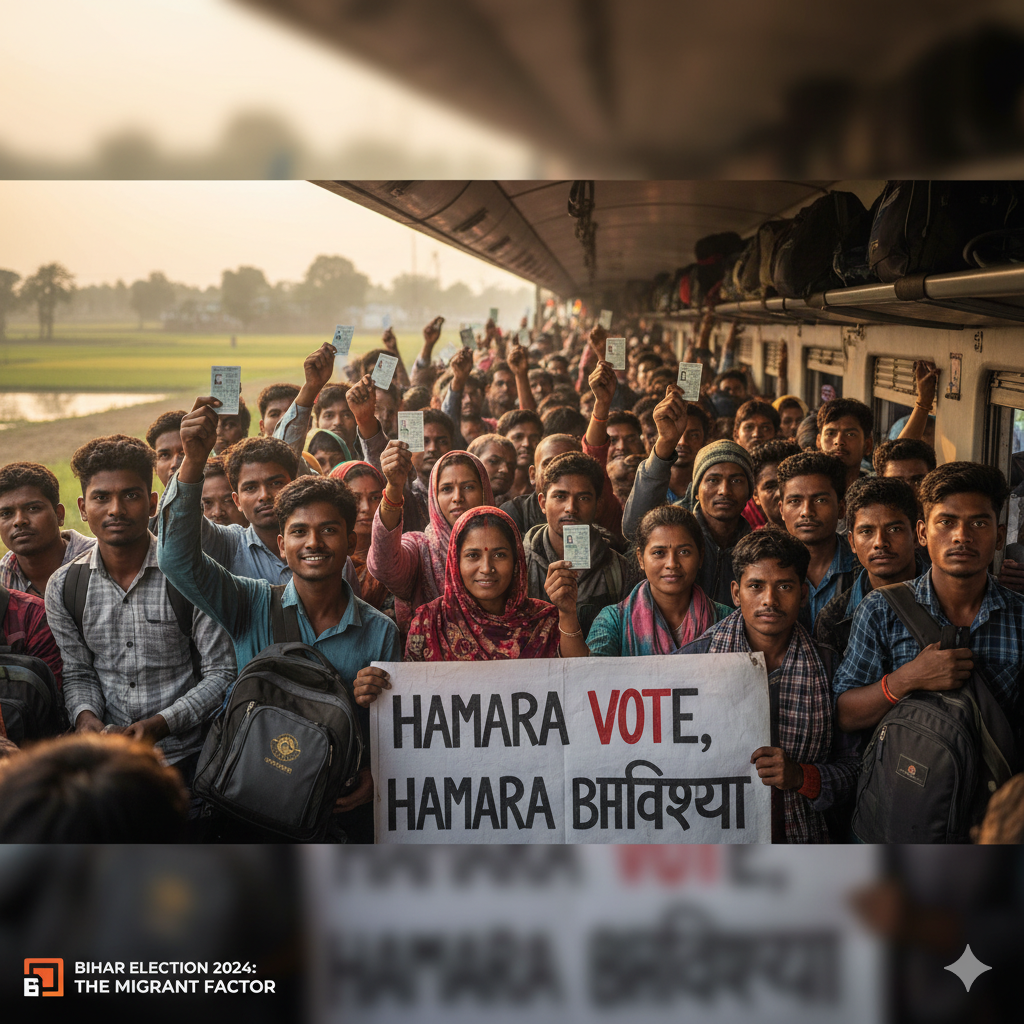
The recent Bihar Assembly elections elevated a previously overlooked demographic to the forefront of political analysis: the state’s massive population of migrant workers. Their unexpected, large-scale participation, often spurred by a return home for the Chhath festival, positioned them as a crucial “X-factor” capable of tilting the electoral balance in closely contested constituencies.
The Shift in Voter Sentiment
Political observers and new political entrants, such as Prashant Kishor’s Jan Suraaj party, have pointed to the record voter turnout as evidence of this change. According to this view, the strong participation by youth and returning migrants reflects a deep-seated public desire for political overhaul (badlao) and dissatisfaction with the long-standing political establishment.
These voters are largely motivated by the state’s chronic lack of local job opportunities, which forces millions to seek work in industrialized cities across India. Their decision to remain in Bihar to cast a vote—often overcoming significant logistical and financial hurdles—is seen as a collective, unified demand for a government that prioritizes economic growth and reverses the cycle of out-migration.
Challenging Traditional Electoral Factors
The influence of the migrant vote is significant because it potentially dilutes the impact of traditional factors that have historically decided Bihar’s elections.
- Beyond Welfare: The migrant workers’ focus on employment challenges the assumption that targeted welfare schemes (like financial aid for women voters) would solely determine the outcome. While women remain a vital voting block, the migrant factor introduces a strong, independent counter-narrative centered on fundamental economic development.
- The Economy vs. Identity: While caste-based politics still plays a major role, the mobilization of migrants on the common platform of jobs and livelihood suggests that core economic issues are gaining prominence, particularly among the state’s youth.
In essence, the migrant workforce has transformed from a silent economic necessity to a politically articulate force, demanding that the next government address the reasons why they are forced to leave home in the first place.